
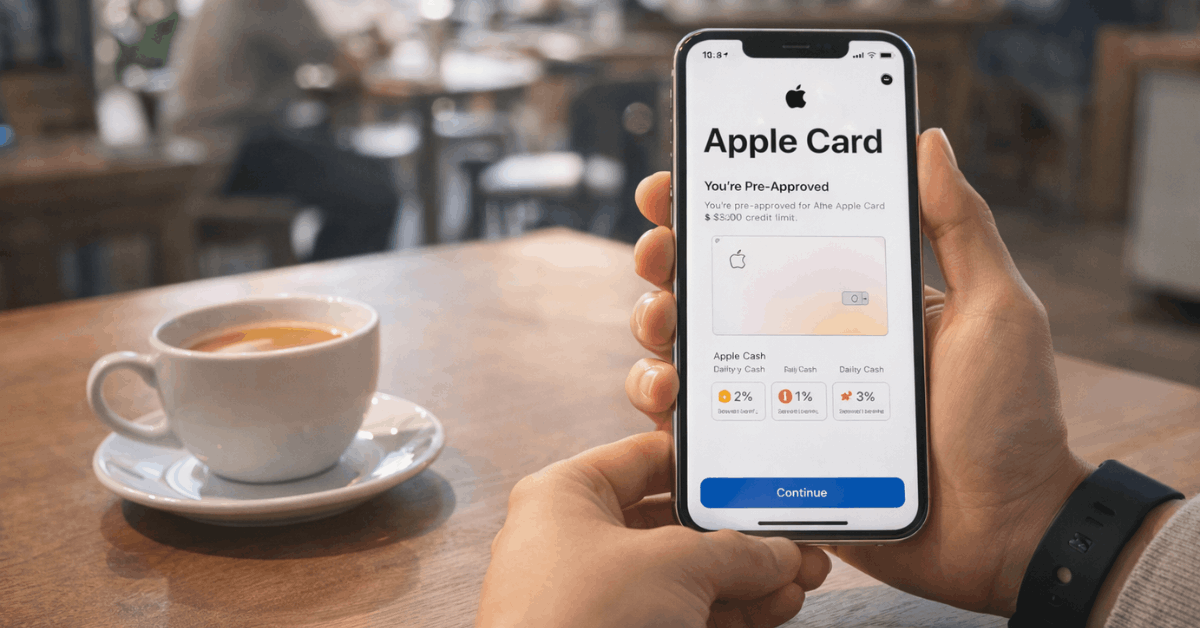
Apple Card's easy application stands out because the process happens inside Apple’s ecosystem, often in minutes, and shows a credit offer before any hard inquiry is triggered.
For many applicants, that feels far simpler than traditional card applications that require a separate website, long forms, and delayed decisions. Daily Cash rewards, fee-free terms, and Wallet app controls also make the card attractive for people who want a clean, mobile-first setup.
A practical point matters early: Apple Card is currently available to qualifying applicants in the United States, and eligibility rules still apply even if the application flow feels fast. Credit approval is required, and the offered credit limit and APR depend on creditworthiness.
Why The Apple Card Application Feels Easier Than Traditional Cards
Most credit cards still push applicants through a bank portal, then a wait period, then a separate account setup process. Apple Card combines those steps into one app flow on an eligible iPhone or iPad. That design reduces friction, which is a big reason many people search for an Apple Card approval process guide.
Wallet-based setup also helps after approval. Spending, payments, balances, and rewards stay in one place, so account management starts immediately instead of requiring a second app download.
A digital card becomes available right after acceptance, and a titanium card can be requested later if needed.
Privacy and security features add to the appeal as well. Apple emphasizes that transaction management stays inside Wallet, and Apple Card includes tools such as a virtual card number for online purchases.
Apple Card Eligibility Requirements Before You Apply
Eligibility is where many applications succeed or fail, so checking this first saves time. Apple Support lists clear baseline requirements for applicants.
Basic Eligibility Checklist
A smooth Apple Card eligibility requirements check usually includes these points:
- Age must meet the minimum legal requirement where the applicant lives, typically 18 or older.
- U.S. citizenship or lawful residency is required, along with a valid physical U.S. address (not a P.O. Box, though military addresses can be used).
- An eligible iPhone or iPad with the latest iOS or iPadOS is required for full Apple Card features.
- Apple Account sign-in and two-factor authentication must be active.
- Identity verification may require a driver’s license or state-issued photo ID.
Credit report freezes can also block the application. A temporary lift may be needed before submitting the request.
How to Apply to the Wallet on iPhone or iPad
The actual application for Apple Card on iPhone is short, which explains why people describe it as one of the simplest mainstream card applications in the U.S.
iPhone Application Steps
The Wallet app Apple Card application flow on iPhone usually looks like this:
- Open Wallet and tap the Add button.
- Select Apple Card, then tap Continue.
- Complete the application details.
- Review and agree to the terms and conditions.
- Accept the offered credit limit and APR if approved.
Approval can happen quickly, and Apple says applicants can see an offer with no impact to their credit score during the application stage. A hard inquiry happens only after approval and offer acceptance, which may affect the credit score.
iPad Application Steps
An Apple Card instant approval outcome is also possible on iPad, assuming the same eligibility conditions are met. The path is slightly different:
- Open Settings.
- Tap Wallet & Apple Pay.
- Tap Add Card, then choose Apple Card.
- Complete the application and review the offer.
- Device region settings matter here. Apple notes that the device region must be set to the United States to begin the application.
What Happens After Approval Or Decline
Application results usually create a clear next step, which keeps the process predictable even if the answer is no.
If The Application Is Approved
Approval does not force an immediate decision forever. Apple gives applicants up to 30 days to accept the offer. After acceptance and Wallet setup on an eligible iPhone or iPad, account access becomes much more useful.
A typical Apple Card credit limit offer includes the assigned limit and APR. Accepted users can then make purchases where Mastercard is accepted, manage payments in Wallet, view statements online, and set Apple Card as the default payment method for Apple Pay and Apple services.
Physical card fans can also request the titanium Apple Card after acceptance. Daily purchases made with the physical card earn 1% Daily Cash, while Apple Pay purchases usually earn more.
If The Application Is Declined
Declines are not always permanent. Eligibility issues, identity verification problems, or credit profile factors can trigger a denial.
Apple and Goldman Sachs support materials also point applicants to eligibility checks and troubleshooting steps, especially if the issue is insufficient credit for a planned Apple device purchase.
Photo ID scanning problems can also interrupt the process. Apple’s support guidance says contacting an Apple Card Specialist at Goldman Sachs is the next step when ID verification fails.

Daily Cash Rewards, Fees, and High-Limit Appeal
Rewards and fees are where Apple Card gets most of its attention, especially for people comparing everyday-use cards.
Daily Cash Rates and Payout Timing
The Apple Card Daily Cash rewards structure is straightforward:
- 3% Daily Cash on Apple purchases and select merchants when using Apple Card with Apple Pay.
- 2% Daily Cash on purchases made using Apple Pay.
- 1% Daily Cash on purchases made with the physical titanium card.
Apple also highlights that Daily Cash is unlimited and can be routed to Apple Cash or, for eligible owners and co-owners, to a Savings account through Apple Card.
No-Fee Structure
The Apple Card's no fees and no foreign transaction fees pitch remains a strong differentiator for travelers and international online shoppers. Apple markets the card as having no annual fees, no late fees, and no foreign transaction fees.
That matters more than it sounds. Many rewards cards still charge at least one of those fees, which can quietly reduce the value of cash back.
High Limit Expectations and Reality
Search interest around high Apple Card credit limits is common, and many users report strong starting limits after approval.
Actual limits vary widely, though, because underwriting still depends on income, credit history, and overall credit profile. A fast application does not mean guaranteed high limits, even when the experience feels simple.
Important Terms, Credit Impact, and 2026 Updates
Credit score impact is one area that gets misunderstood. Apple’s process lets applicants submit and see an offer without an initial hard pull, but accepting an approved offer triggers a hard inquiry that can affect credit.
APR is also variable. As of January 1, 2026, Apple Card variable APRs for new accounts range from 17.49% to 27.74%, based on creditworthiness. Exact terms should always be checked in the offer screen at application time.
Apple Card remains available, and the application process stays the same for now, while Apple has announced a future issuer transition to Chase over an expected multiyear timeline. Current features and application access continue during that transition period.
Final Take
Apple Card's easy application is genuinely easier than most traditional card applications, especially for people already using an eligible iPhone or iPad daily.
Fast offer visibility, immediate Wallet setup, unlimited Daily Cash, and a no-fee structure make the card compelling for the right U.S.-based applicant.
Eligibility, credit approval, and final terms still control the outcome, so the smartest move is a quick eligibility check first, then a careful review of the offered limit and APR before accepting.